
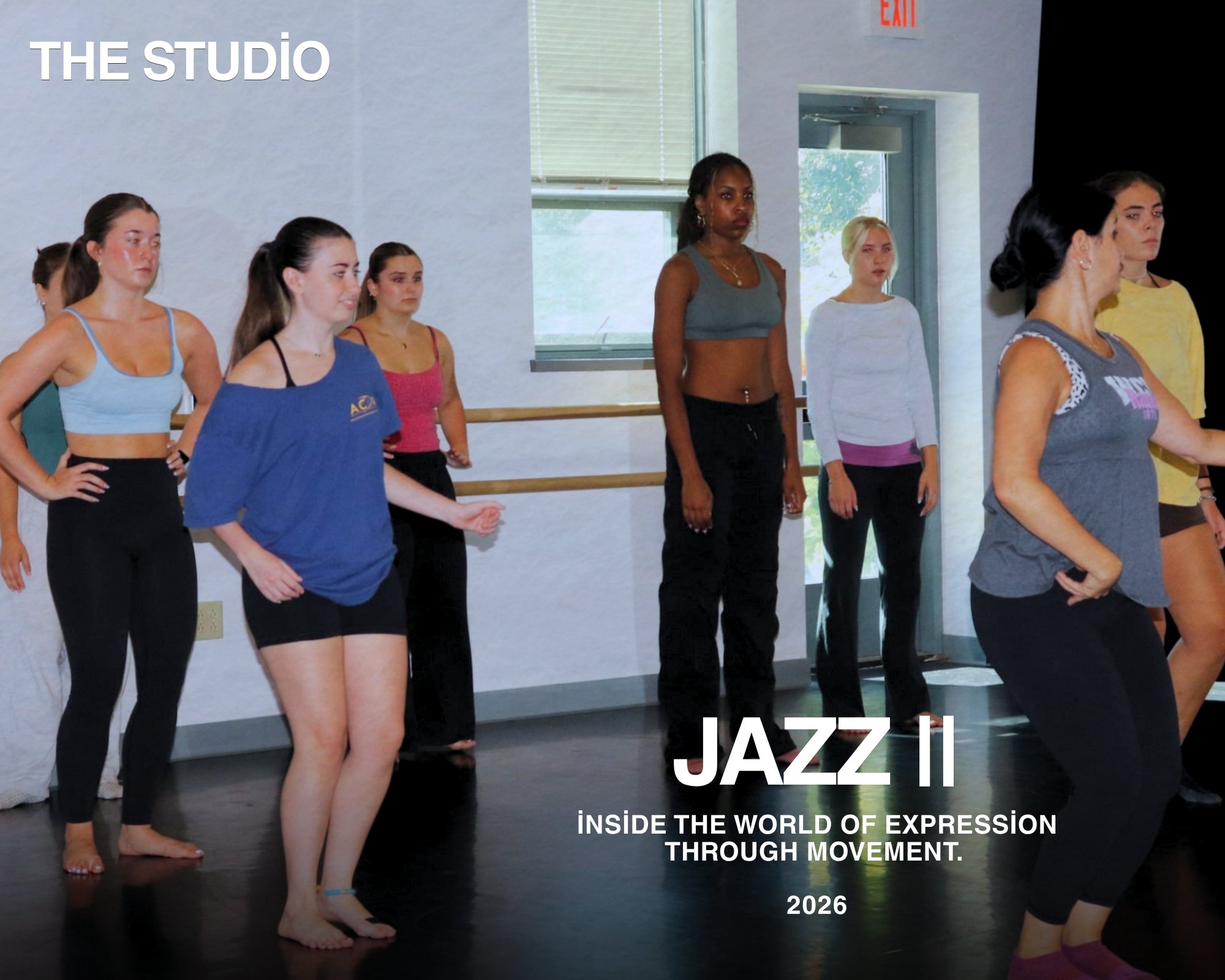
Finding a community in college can make a large university feel a little bit smaller. For students involved in dance, that community can begin in a studio, on a stage, or even through a shared love of movement. It can be a way to express yourself authentically, build friendships and become part of a community. Dance can also be a useful tool for supporting mental health. At West Chester University, students get to experience dance in these and other ways that extend beyond the stage.
More than a Performance
Dance can be both a physical and creative outlet. It allows students to work and move their bodies, exploring the creative aspect of movement. Dance student Rose Grace explains that “many other sports solely focus on movement, but dance allows both physical and creative aspects to flourish.” Outlets like these can be very influential in a student’s life. Faced with the stressors of classes, exams and social lives, students in dance classes can find an accepting environment to release their thoughts, emotions, and tensions and to find some clarity in the very busy life of a student.
Dance moves more than just your body. A substantial amount of research shows how dance can be mentally beneficial. According to the ScienceInSights evaluation, “A meta-analysis found that dancing for at least 150 minutes per week significantly reduced depression symptoms, with an effect size comparable to established therapies” (ScienceInSights, para 1). In addition to supporting mental health, dance can enhance memory and coordination. Learning choreography sharpens the ability to remember patterns while fully having control of the body.
As ScienceInSights explains, “Dance increases the production of a protein called brain-derived neurotrophic factor (BDNF), which supports the growth and maintenance of brain cells” (ScienceInSights, para. 3). Dancers must concentrate on each footstep, listen to the music, and coordinate with others on stage, requiring these athletes to be in the moment. Thinking about what matters and solely focusing on the present.
What dance opportunities are available to students?
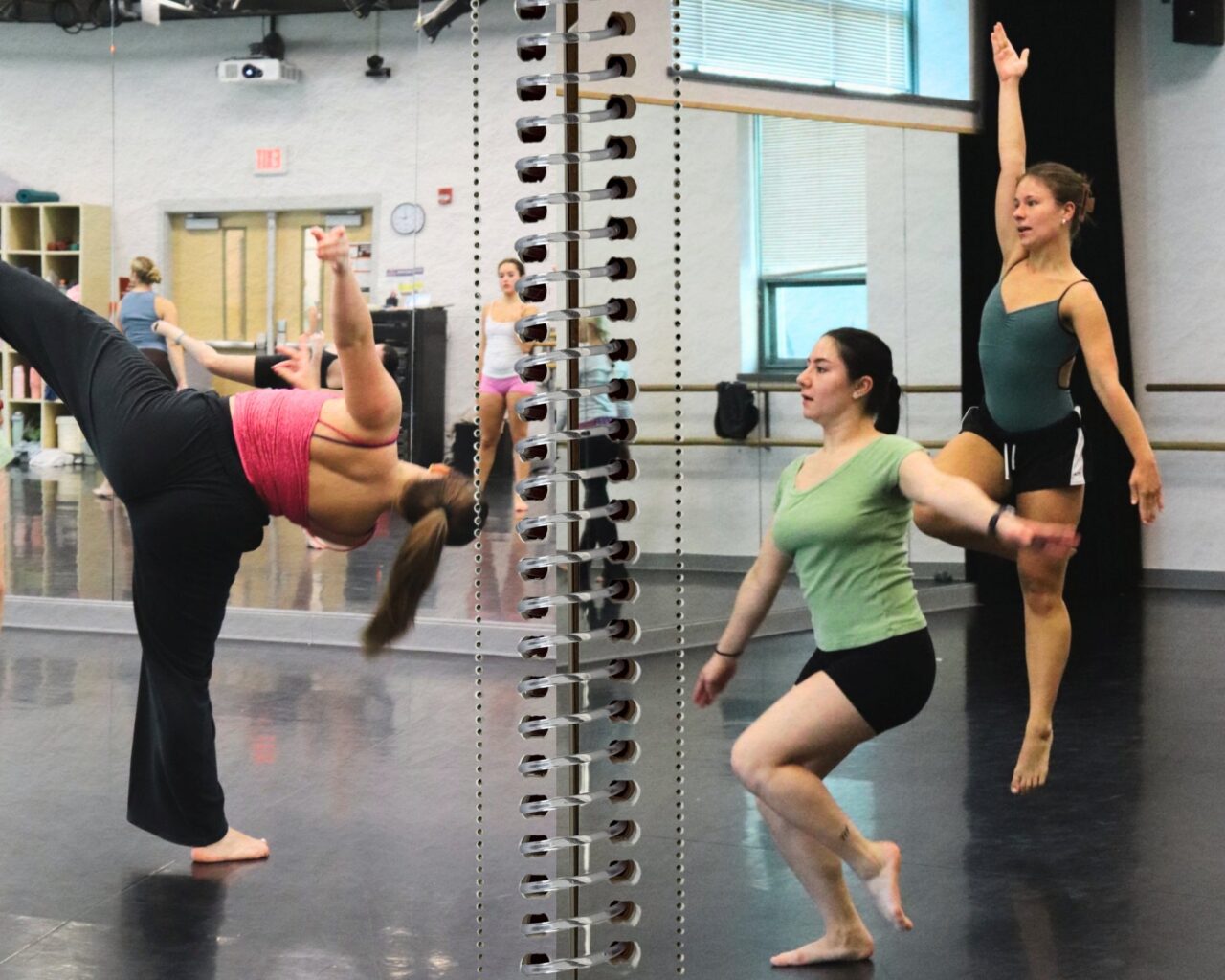
Students at WCUPA have a variety of options to get involved in dance. Options range from Modern, Jazz, Hip-Hop, Ballet, Ballroom, Tap, and African dance, just to name a few. The WCU Department of Theatre and Dance offers its students a minor in Dance as well. The program consists of 19 credits, including dance history, technique, choreography, and production, without the requirement of auditioning.
Students can participate in WCU dance clubs and teams. Clubs such as WCU Swing Dance Club and the Ballroom Dance Club hold weekly sessions catering to both beginners and advanced levels. Students have the opportunity to practice their techniques while supporting a social outing.
WCU also has a competitive dance team. It operates with the WCU Sports Club Council and performs school spirit at football, basketball games and campus rallies. The dance team also competes nationally at UDA events.
Community: How do students form friendships and connections through dance?
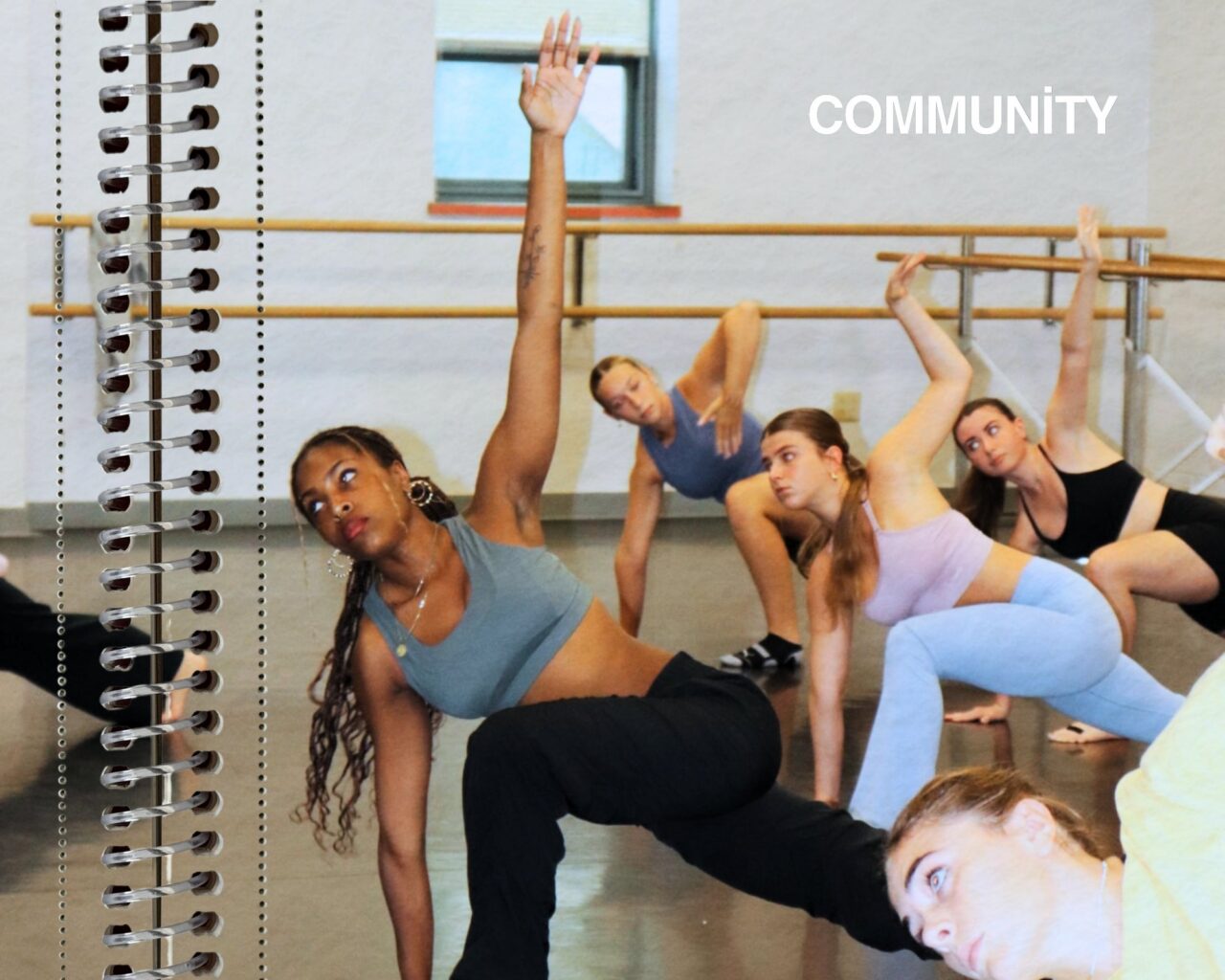
Dance is one of those sports where pushing one another is essential for the overall health of the group because every single person matters. Every single person influences the visual outcome and the performance of others. If one person is removed from a piece, you get a completely different product in the end. There can be hours upon hours of working together, and if someone gets injured or is removed, altering the choreography of the piece can take just as long. Dance creates a very interdependent atmosphere, so a sense of community becomes hugely important.
Each athlete needs to fully allow themselves to trust the others. “Dance provides me with a very safe and comforting community. We have to be very vulnerable when we dance, so we can see each other’s souls when we dance” (Mary Loiseau, WCU Student). Being constantly vulnerable in the eyes of others can lead to some really strong and meaningful relationships.
I visit Jazz || in the studio and document the experience. While I am there, I notice the girls constantly uplifting one another. Cheering each other on and rooting for everyone’s success. When someone was receiving tips from a professor. Urruita or working on their own flow, sounds of encouragement filled the studio. The moments without music rang with laughter and positivity.
College is a huge transition period. Navigating life while trying to understand who you are, all while balancing academics. It can feel overwhelming and sometimes lonely, starting over. Having the space to express yourself and a community that is abundant in encouragement can make a world of difference. A studio where students can move their bodies creatively, quickly becomes a home filled with friends.
Expression: How does dance allow students to express themselves creatively/emotionally?
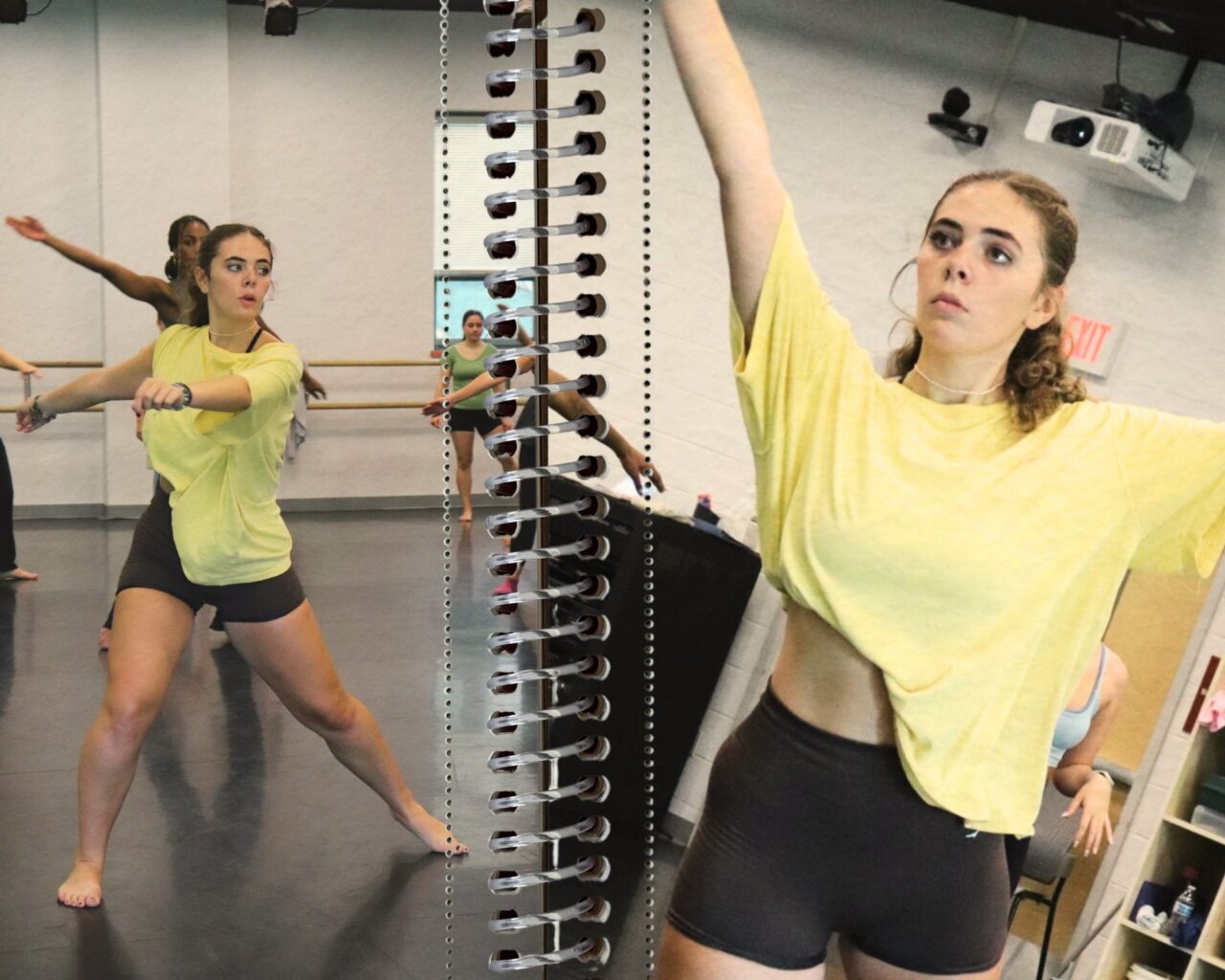
From attending just one class, I can immediately sense the safe space the students are describing. Each student moved around the studio with energy that allowed them to move without the fear of judgment. It was quite beautiful to watch them communicate themselves authentically, surrounded by their friends. Performing and creating dance pieces can boost students’ confidence and self-esteem, allowing them to feel seen and valued. Student Naziyah Payton said, “Dance lets me express myself in a very creative yet meaningful way. When you’re dancing, you can translate your thoughts into movement.”
This self-expression can support identity development and teach students how to integrate personal perspectives into their artistry. Identity forming is an internal and external journey. Drexel University student Caitlyn Green observes that “Thinking about identity as solely regarding the individual’s thoughts, beliefs and preferences as separate from the environment in which the person engages can only result in an incomplete view and understanding of the self” (Green, Caitlyn. Pg. 17).
The identity to which we develop is built around the people we surround ourselves with and the environments we allow into our space. The relationships and encouragement within a dance community can shape how students see themselves. Which is extremely important in such a fluid time in a student’s life.
Basically, the deal with dance is the powerful environment it provides students, allowing them to discover the road of self-expression through movement. Forming deep connections and relationships through a shared love can create a support system that can have lasting impacts on students. One moment that stood out to me while I was at the studio was watching the entire group come together after finishing a difficult combination.
As the music died down, the dancers immediately began cheering for one another, complimenting each other’s movements and celebrating what they had just accomplished. There was a genuine sense of excitement and pride. They were not only focused on their own performance but also invested in the success of others around them.
WCUPA Fall Dance Concert Details
West Chester University will be holding a dance concert for students to showcase their hard work in front of friends and family. The concert will be the weekend of November 6th and 7th, located in the Madeleine Wing Adler Theatre. Tickets are available online for purchase and linked below. Theatre and Dance Concert Details
Citations
ScienceInSights, How Dance Helps Your Mental Health, Mood, and Brain, ScienceInSights, March 6th, 2026, How Dance Helps Your Mental Health, Mood, and Brain—ScienceInsights.
Green, Caitlin. Dance Improvisation and Identity Development: Exploring the Role of the Body in Experiencing and Expressing Self. Drexel University, 2019. Drexel University, https://doi.org/10.17918/00000216.