By: Sewanu Hundeyin
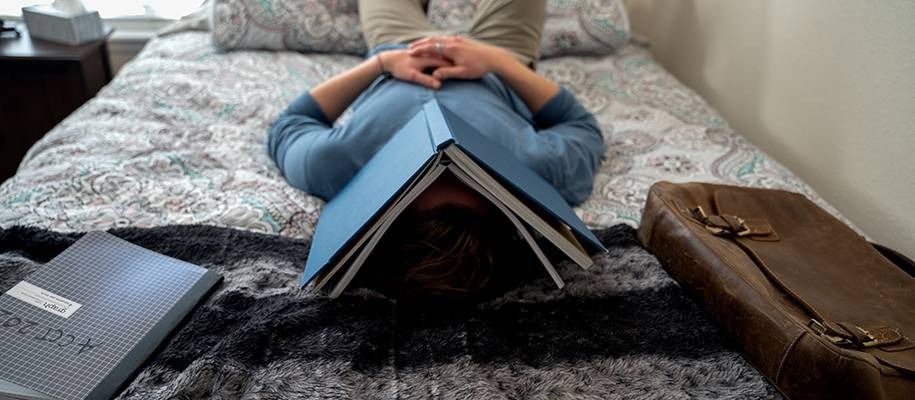
Let me help you visualize this. It’s the Tuesday before finals week. You’ve already had 2 classes back to back, a group meeting that was a pure waste of time, and a terrible shift at work. Now, you’re back in your dorm attempting to complete a five-page paper that is due that same night. You deceive yourself by saying: “It’s all good, I’ll sleep in this weekend.”
I feel like we’ve all been there. As a senior who has lived on campus, procrastinated like my life depended on it, and survived up until now, I can tell you that missing sleep is a dangerous game. My freshman year at West Chester was one of the most memorable years of my life, new experiences, people, freedom, new everything. Amidst the newness of college life, sleep was the first thing I compromised.
And I was wrong for it. My own burnout, and science, proved that you cannot “catch up on sleep. Here is why that phrase is hurting your social life and your GPA, and what to do about it instead.
The Myth of the “Sleep Bank”
Think of sleep like a checking account. You might think you can take out hours during the week and make a huge deposit on Saturday morning to balance it out. But sleep does not work like money.
According to licensed psychologist, Natalie Staats Reiss at Case Western Reserve University, students who sleep 14 hours on Sunday to make up for lost sleep are actually damaging their sleep cycles. When you overcompensate for sleep on weekends, you alter your internal clock. This makes it even more difficult to wake up for class on Monday, creating that cycle that goes on and on. https://case.edu/news/cwru-psychologist-offers-tips-better-nights-sleep
A recent study at the University of Houston concluded that workload, not major, is the leading factor influencing sleep quality. Whether you’re an education major or a Finance bro, the stress is existent and it will ruin your sleep. https://uh-ir.tdl.org/server/api/core/bitstreams/2d975d43-10b7-42de-9dff-6e2267c9e916/content
Why 6 Hours Just Doesn’t Cut It
I know exactly what you’re thinking, “I function perfectly on 6 hours of sleep.” Do you really?
The CDC says that adults aged 18-60 need seven or more hours of sleep per night. But here at Dub C, we often treat sleep like a proposition, not an obligation.
When you cut on sleep, you are not just “saving time” for studying. You are actively undoing that studying. According to the American Psychological Association, your brian conveys information to long-term memory during the REM cycle which occurs about six to eight hours into sleep. If you cut on sleep, you are closing that window for your brain to store that information you crammed.
A study published by the University of Illinois confirms that sleep deprivation impairs memory retention, attention span, and brain connectivity. Pulling an all-nighter to study for whatever exam may actually be the reason your mind goes blank during exam time. https://ugresearchjournals.illinois.edu/index.php/brainmatters/article/view/1085/943
The WCU Freshman Trap
I remember my freshman year so vividly. I finally had freedom from my parents, friends are in the same room as me, places to go late at night. The Fear of Missing out is real. But as one one Dub C senior put it, the goal is to agree to everything without burning out.
How to Fix Your Sleep
So, how do we solve this problem? You do not have to be the person who goes to sleep at 8 p.m., but what you need is a strategy. Here are some tips from experts and fellow students to help you survive at WCU:
1. Plan Like Your GPA Depends On It
Plan your free time during the day in order to get work done before your friends try to ask you to hang out. If you finish your work earlier, you won’t be up until 3 a.m. finishing assignments. Utilize the time between classes wisely instead of procrastinating while on TikTok.
2. Create the “Cave”
Your dorm should be for sleeping. If you live in a single, try to study in a classroom building or the library. Keep your room as dark, calm, and cool as possible. If your roommate keeps different hours, try soothing noises. You need to teach your brain that the bed is for sleeping, not losing your mind over an upcoming exam.
3. The 20-Minute Rule
If you are tossing and turning, don’t lie there frustrated. If you are not able to fall asleep after 20 minutes, get up. Read a book or listen to relaxing music for a bit. Lying in bed awake causes your brain to associate frustration with your bed.
The Bottom Line
You are here at West Chester to transform yourself. You want to feel confident, focused, and ready to be the best version of yourself. But you cannot do that if you are constantly running on low energy.
Sleep is not the enemy of productivity; it is the fuel for it. When you rest, your body releases hormones that replenish your brain and body. When you don’t sleep, your social life suffers because you are too tired to enjoy it.
So, take it from a senior who made it to the other side: Go to sleep!